As technology continues to evolve rapidly, a company’s website is more than just a digital storefront—it’s a critical tool that must be optimized for performance, scalability, and ease of maintenance. At Lynxmind, we recently overhauled our website, moving away from an outdated tech stack and inefficient workflows to a modern, high-performance setup powered by Astro. This transformation also involved migrating to GitHub for version control and implementing GitHub Actions for CI/CD, significantly improving development agility.

Why Rebuild the Lynxmind Website?
Before embarking on the rebuild, we assessed the limitations of our previous setup. Several factors made it clear that a change was necessary.
Challenges with the Previous Tech Stack
- Difficult to Modify and Extend: The old codebase, built with Bootstrap and jQuery, was rigid and hard to maintain, making even minor changes an hassle.
- Outdated Technology: These technologies were functional in their time but weren’t aligned with modern best practices for performance, accessibility, or scalability.
- Slow and Confusing Deployment Process: Updates required unnecessary manual intervention, increasing the risk of errors and downtime.
- Poor Performance: Lack of file minification, unoptimized images, and excessive JavaScript slowed down the site significantly.
- Uncooperative Codebase: The absence of a version control system like Git made collaboration and tracking changes difficult and error-prone.
Business Goals Behind the Rebuild
- Improve Client Experience: Faster load times and a smoother navigation experience were top priorities.
- Ease of Change: The new architecture needed to allow quick modifications and enhancements without complexity.
- Collaboration: By modernizing the workflow and integrating Git for version control, we aimed to enable seamless collaboration between team members and stakeholders.
Why Astro?
After evaluating multiple options, Astro emerged as the best choice for the rebuild.
Static Site Generation for Improved Speed and SEO
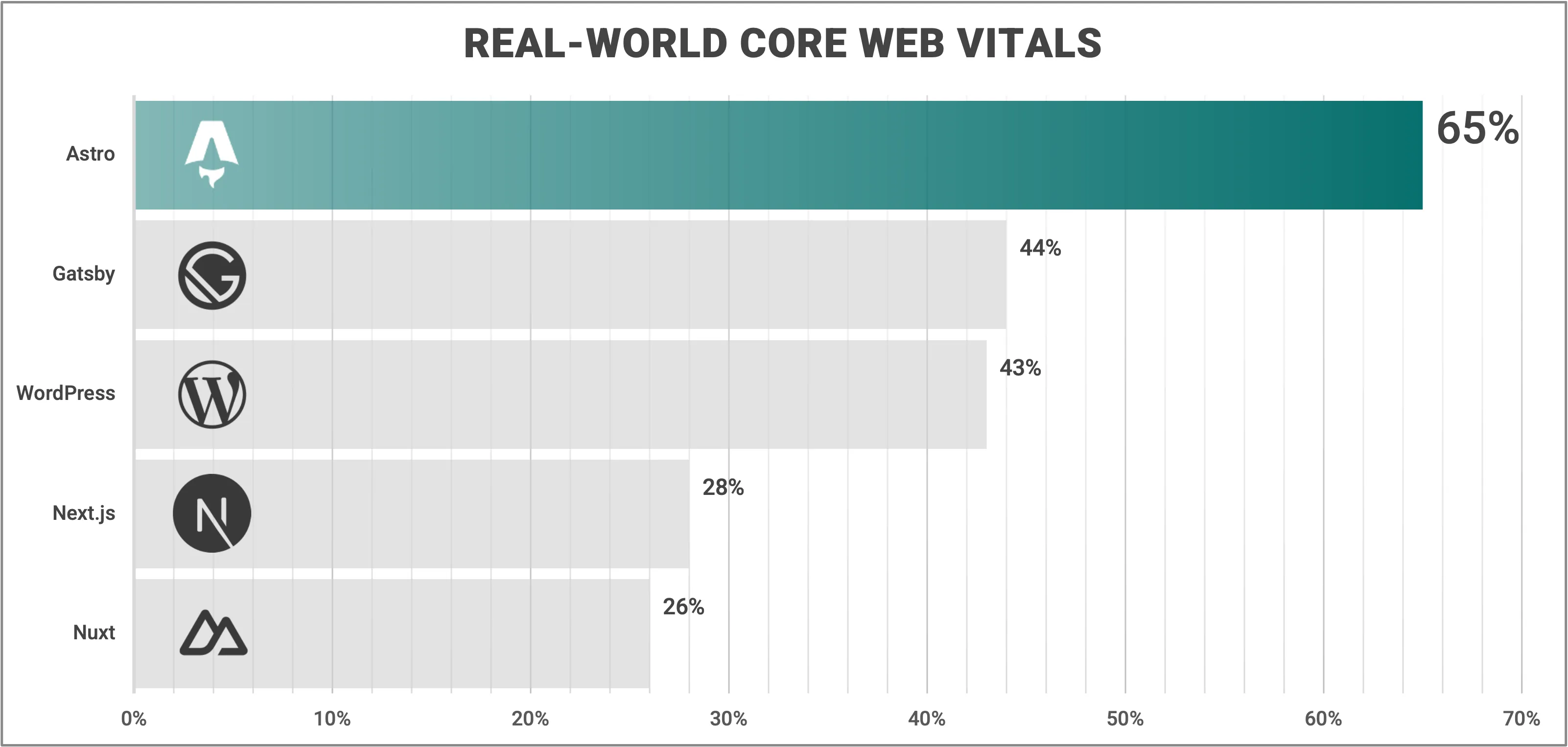
Astro is one of the fastest static site generators, offering a framework-agnostic approach that works well with React, Vue, Svelte, and other UI libraries. The built-in MDX support was particularly useful for structuring blog content efficiently. Astro demonstrates exceptional real world web vitals compared to other popular frameworks, as shown in the graph below:
Partial Hydration for Optimal Interactivity
One of Astro’s standout features is partial hydration, allowing interactive components to load only when necessary. This keeps the JavaScript footprint minimal while maintaining flexibility.
Minimal JavaScript Footprint, Enhancing Performance
Astro ships only the required HTML and CSS by default, significantly reducing load times compared to traditional client-side rendered frameworks.
Migrating the Codebase to Version Control
The transition to GitHub was a crucial step in modernizing our workflow.
Initial Experience with Azure DevOps and Why We Switched to GitHub
While Azure DevOps offers powerful features, we found it less intuitive for our specific needs. GitHub’s tight integration with CI/CD, ease of collaboration, and support for preview environments on pull request creation made it the superior choice.

Benefits of GitHub for Collaboration, Security, and Integrations
- Easier Collaboration: GitHub’s ecosystem (pull requests, code reviews, discussions) makes team collaboration smoother.
- Strong Security: Features like code scanning and Dependabot help detect vulnerabilities early.
- Rich Integrations: Seamless compatibility with GitHub Actions, issue tracking, and project management tools.
Setting Up CI/CD with GitHub Actions
Automating Deployments Using GitHub Actions
GitHub Actions provided a simpler, more flexible alternative to Azure DevOps for CI/CD. We leveraged its native integration with Azure Static Web Apps, enabling seamless deployments with minimal configuration.
Moving Away from Kubernetes and Docker for a Simpler CI/CD Approach
Initially, we explored using Kubernetes and Docker, but managing these solutions became an overhead for a simple static site. We opted for GitHub Actions with direct deployments to Azure Static Web Apps, which offered faster deployment times and lower complexity.
How CI/CD Improves Development Agility and Reliability
- Faster Development Cycles – no more manual deployments.
- Reliable Releases – every change is tested in preview environments before merging.
- Time Savings – developers focus on building features instead of deployment overhead.
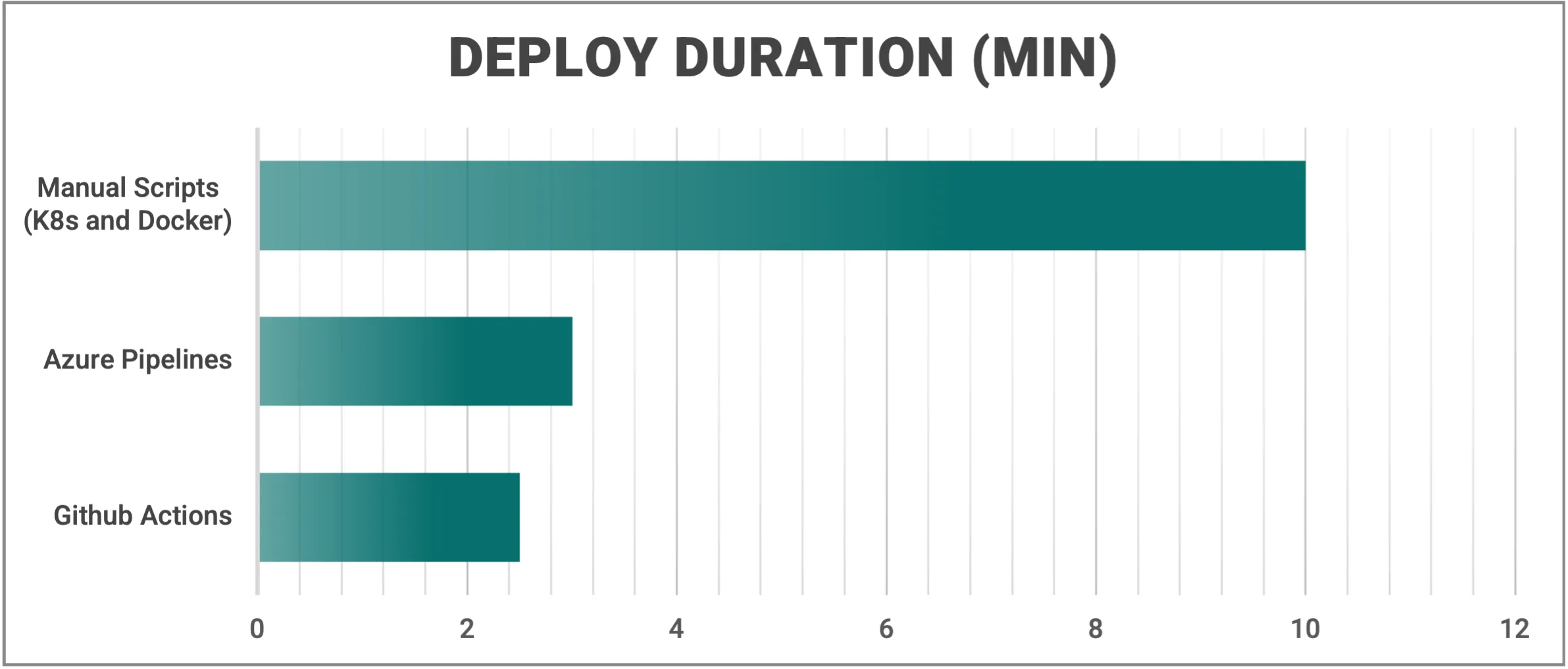
As evident from the graph below, the improvements are significant. We completely eliminated manual work, which reduces overall risk, and reduced deployment time by 70%. The time savings are impressive over time.
Performance Gains After the Migration
Web Vitals are a set of performance measures from Google that help determine if a website is fast, responsive, and visually stable.
Our previous Web Vitals were not great, so the results were immediate: We saw a significant jump in Lighthouse performance scores, especially in metrics like First Contentful Paint (FCP) and Largest Contentful Paint (LCP).
🔍 Before vs. After: Lighthouse Scores for website


Optimized Asset Delivery
Astro bring essential asset optimizations that also weighs-in on the performance improvements.
- Lazy Loading Images to reduce initial load times.
- Minimal JavaScript for improved interactivity without bloating page weight.
- Built-in Support for Efficient Image Formats like WebP.
SEO & Accessibility Improvements
Static Rendering Benefits for Search Engines:
- With Astro’s static generation, all pages are pre-rendered at build time, improving SEO indexing and crawlability.
Semantic HTML and Accessibility Best Practices:
- Proper use of headings, alt attributes, and ARIA roles for a more user-friendly experience.
Lessons Learned & Best Practices
Key takeaways from migrating to Astro and GitHub:
- Transitioning from Bootstrap and jQuery to Astro with Typescript, React and Tailwind was straightforward.
- The rebuild focused on maintaining the original design while completely rewriting the codebase.
- GitHub’s ecosystem improved development efficiency and made contributions easier.
Potential challenges and solutions:
- The migration took approximately 80 development hours, but the SEO gains, UX improvements, and future agility more than justified the investment.
- Normalizing UI components improved brand consistency and made future changes more maintainable.
Why Businesses Should Choose the Right Tech Stack
Selecting the right stack early prevents technical debt, costly rewrites, and inefficient workflows down the line. By choosing Astro, GitHub, and GitHub Actions, we ensured a future-proof foundation for our website.
Long-term benefits of investing in modern web technologies:
- Better Performance → More User Engagement
- Easier Maintenance → Faster Iteration Cycles
- Optimized Workflow → Reduced Development Costs
Next Steps for Lynxmind
-
We’re considering adding a CMS for blog posts and for a future news section, making content management even easier.
-
Our experience in modern frontend development, DevOps, and performance optimization allows us to help clients make informed technology choices that maximize their digital impact.
Conclusion
Rebuilding the Lynxmind website with Astro, GitHub, and GitHub Actions was more than just a technical upgrade—it was a strategic move towards better performance, streamlined workflows, and a more scalable development process. The improvements in speed, SEO, and ease of maintenance have already shown measurable benefits, proving that choosing the right tech stack matters.
📩 If your business is looking to improve website performance and agility, Lynxmind is ready to help. Let’s build something great together!